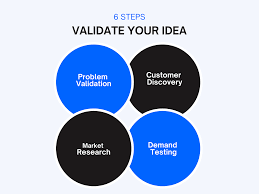
What is Idea Validation and Why It’s Your First Smart Move
Idea validation is the process of checking if your business idea has potential. It’s about finding out if people will actually pay for what you plan to offer. Think of it as a reality check.
It helps you avoid wasting time, money, and energy on something that might not work.
Most people get excited. They see a problem and think, “I have the perfect solution!” They start building. Then, they show it to the world.
But if no one uses it or buys it, all that hard work feels like a waste. Validation is your safety net. It helps you refine your idea before you build it.
It makes sure you’re building something that matters to others.
It’s not about proving yourself right. It’s about finding the truth. The truth of whether your idea can become a real, successful venture.
This early step saves you from major headaches down the road. It’s truly the most important part of starting any new project. It guides you toward success.
The Big Why: Saving Time, Money, and Heartache
Imagine spending months coding an app. You pour all your savings into it. Then, you launch.
Crickets. That’s a painful scenario. Idea validation helps prevent this.
It’s about smart beginnings.
By testing your idea early, you learn what people like. You also learn what they don’t like. This feedback lets you change your idea.
You can make it better. You can steer it in a direction that’s more likely to succeed. It’s much easier and cheaper to change an idea on paper than a finished product.
This process also helps you understand your target customers better. Who are they? What are their real needs?
What are they willing to pay for? Getting these answers upfront is gold. It sets a strong foundation.
It increases your chances of building a business that truly resonates.
Idea validation is testing your business concept to confirm demand and customer interest before significant investment, ensuring you build a product or service people actually want and will pay for, thereby minimizing risk and maximizing success potential.
My Own “Oh No!” Moment: A Story of Skipping Steps
I remember one time, I had this idea for a niche online course. It was about a very specific hobby I loved. I spent weeks creating fancy video lessons.
I designed a beautiful website. I felt so proud. I launched it with a big announcement.
Then… nothing. A few friends bought it out of kindness. But strangers?
Very few. My heart sank. I was so sure everyone would love it like I did.
I never actually asked anyone if they’d pay for it before I made it. I just assumed they would. That was a tough lesson.
It taught me the hard way that my passion doesn’t automatically translate to market demand. Now, I always start with validation.
Core Explanation: How to Actually Validate Your Idea
Validating an idea isn’t rocket science. It’s more about smart observation and listening. It involves a few key steps.
You start with what you think your idea solves. Then, you talk to people. You watch what they do.
You try to get them to commit in some small way.
Understanding Your Core Problem and Solution
What problem does your idea solve? Be super clear. Who has this problem?
How painful is it for them? Your solution should directly address this pain point. If you can’t clearly state the problem and how you solve it, your idea might be too fuzzy.
For example, let’s say you notice people struggle to find good, local dog walkers. The problem is inconvenience and trust. Your solution is a vetted, easy-to-use app connecting dog owners with reliable walkers.
That’s clear. If your idea is just “a cool gadget,” that’s not a problem, that’s a thing. Dig deeper.
Identifying Your Target Audience
Who are the people most affected by this problem? Be specific. Are they young professionals?
Busy parents? Retirees? What are their demographics?
What are their habits? Where do they hang out online and offline?
Knowing your audience helps you talk to the right people. It also helps you tailor your message. If you want to sell a gourmet pet food, you’re not talking to cat owners who buy the cheapest kibble.
You’re talking to people who see their pets as family and want the best. That’s a very different group.
Researching the Market
Is anyone else already solving this problem? What are they doing? How well are they doing it?
Are there tons of competitors, or is it a wide-open space?
This is not about getting scared if others are doing it. It’s about learning. Competitors show there’s a market.
You can learn from their successes and failures. How can you be different? How can you be better?
Maybe you offer a unique feature, better customer service, or a lower price point.
Look at market size too. Is the group of people with this problem large enough to support a business? A problem only five people have might not be a viable business.
But a problem millions face could be huge. Think about growth too. Is this market shrinking or growing?
Talking to Potential Customers (The “Customer Discovery” Phase)
This is the heart of validation. You need to get out there and talk to real people. Not your mom or your best friend who will tell you what you want to hear.
Talk to strangers who fit your target audience profile.
Prepare some questions. Start broad. Ask about their challenges related to the problem you identified.
Listen more than you talk. Ask open-ended questions. “Tell me about your biggest challenge when it comes to X.” Or, “How do you currently solve problem Y?”
As you talk, you’ll learn a lot. You might find out the problem isn’t as big as you thought. Or that people are solving it in a completely different way.
This is good! It’s early information. It helps you adjust your idea.
Try not to lead them. Don’t say, “Wouldn’t it be great if there was an app that did Z?” Instead, ask, “What’s the hardest part about finding a dog walker?” If they naturally bring up something similar to your idea, that’s a great sign. But if they don’t, that’s also valuable feedback.
Testing Your Assumptions with Minimum Viable Products (MVPs) or Prototypes
Once you’ve talked to people and refined your idea, it’s time to test it more concretely. An MVP is the simplest version of your product or service. It has just enough features to be usable by early customers.
They can then provide feedback for future development.
For a physical product, this might be a simple sketch or a 3D-printed prototype. For a service, it could be a landing page describing your offering. For an app, it might be a clickable wireframe or a very basic functional version.
The goal here is to see if people will actually take action. Will they sign up for a waiting list? Will they pre-order?
Will they click a button that says “Learn More” and give you their email address?
A landing page test is common. You create a simple webpage explaining your idea. You include a call to action, like “Sign Up for Early Access.” You then drive traffic to this page using small ad campaigns.
If people sign up, it shows interest. If they don’t, you know your message or your idea needs work.
This is about validating demand. Not just interest. Demand means they’re willing to commit something, even if it’s just an email.
It’s a small step, but it’s a huge indicator.
Quick Validation Checklist
Problem: Is the problem you solve clear and significant?
Solution: Does your idea clearly solve that problem?
Audience: Do you know who has this problem and how to reach them?
Market: Is there enough demand and space for your idea?
Interest: Do people show genuine interest when you talk about it?
Commitment: Will people take a small step (like signing up) to show they want it?
Real-World Context: Where Validation Plays Out
Validation happens everywhere. Think about a baker. They might bake a small batch of cookies.
They offer samples to people at a farmer’s market. They watch who buys them and what they say. That’s validation.
A software company might release a beta version of their app. They get a group of users. They watch how they use it.
They collect feedback. That’s validation.
Even a freelance writer validating an idea for a new service. They might ask their current clients, “Would you be interested in a service that helps with X?” They look for a strong ‘yes’ and maybe even an offer to be a pilot client.
It’s about stepping outside your own head. It’s about seeking external proof. The environment where this happens is often casual.
It can be a coffee shop, a networking event, or an online forum. The habits involved are listening, observing, and asking thoughtful questions.
The design of your validation efforts matters. A poorly designed survey can yield useless data. A confusing landing page won’t get sign-ups.
User behavior is key. Do people spend time on your landing page? Do they watch your explainer video?
These actions tell a story.
What This Means for You: When to Worry and When to Cheer
Validation isn’t about getting a perfect score. It’s about learning. If you talk to ten people and they all say your idea is great, that’s wonderful!
But if they all seem polite but unenthusiastic, that’s a flag. If your landing page gets tons of clicks but zero sign-ups, something is wrong with your offer or your call to action.
When it’s normal to pivot: If people don’t understand your idea, or if they solve the problem differently, that’s okay. It means your idea needs adjustment. Maybe you need to reframe the problem.
Or offer a slightly different solution. This is the point of validation.
When to worry: If you find that the problem you thought existed isn’t a real problem for anyone. Or if people actively say they wouldn’t pay for a solution like yours. This is a bigger red flag.
It might mean the entire core of your idea needs rethinking.
Simple checks: Ask yourself: Did I talk to enough people? Were they the right people? Did I listen more than I talked?
Did my validation test (like a landing page) have a clear goal and call to action?
Myth vs. Reality in Idea Validation
Myth: If I tell people my idea, they’ll steal it.
Reality: Most people are too busy with their own lives. And truly good ideas are hard to execute. What people will do is give you feedback if you ask nicely.
Myth: My friends and family will give me honest feedback.
Reality: They love you. They want to support you. Their feedback is often biased.
Seek out neutral, target customers.
Myth: Validation means proving my idea is perfect.
Reality: Validation means learning. It’s about finding flaws early so you can fix them. It’s about making your idea stronger, not just confirming it’s good.
Quick Fixes & Tips for Stronger Validation
Here are some simple ways to boost your validation efforts.
- Be specific with your target audience: Instead of “everyone,” aim for “busy moms in suburban New Jersey who work full-time.”
- Craft clear interview questions: Prepare questions that don’t lead the witness. Focus on their past behavior and current challenges.
- Use visual aids: Show sketches, mockups, or prototypes. People understand visual information better.
- Offer a small incentive: A gift card or a discount on your future product can encourage participation.
- Measure what matters: If you run ads to a landing page, track click-through rates and conversion rates.
- Don’t fall in love with your first idea: Be willing to change. The goal is a successful business, not just a beloved concept.
- Look for “skin in the game”: People who offer their email, pre-order, or time are showing more commitment than just saying “sounds good.”
These small adjustments can make a big difference in the quality of the information you gather. It’s about getting real signals, not just polite nods.
Validation Methods at a Glance
Customer Interviews: Talking directly to potential users.
Surveys: Gathering data from a larger group.
Landing Pages: Testing interest with a simple webpage and call to action.
Email Lists: Building a list of interested potential customers.
Pre-orders: Confirming demand by asking for payment upfront.
Prototypes/MVPs: Testing a basic version of the product.
Frequent Questions About Validating Ideas
What if I have no money to validate my idea?
Validation can be very low-cost. Talking to people is free. Creating a simple landing page can be done with free or cheap tools.
Social media outreach is also free. Focus on your time and effort.
How many people do I need to talk to?
There’s no magic number. For initial interviews, 10-20 people from your target audience can reveal a lot. For surveys, hundreds can give statistical significance.
The key is talking to the right people and listening carefully.
What if my idea is very technical or unique?
Even with unique ideas, you can validate the problem. Talk to experts in the field. Talk to people who experience the problem, even if they don’t have a technical background.
Understand their pain points first.
Should I get a patent before validating?
Generally, no. Patents are expensive and take time. Validate the market need first.
If people want it, then you can explore patents. Many successful products launched without patents initially.
What is a Minimum Viable Product (MVP)?
An MVP is the simplest version of your product that still delivers core value to early users. It’s designed to test assumptions and gather feedback with minimal development effort.
How do I know if my idea is “good enough” to build?
If you see consistent signals of interest and willingness to commit from your target audience, and if your validation efforts confirm a real, significant problem that people want solved, your idea has a strong chance. It doesn’t need to be perfect, just viable.
Conclusion: Your Idea Deserves a Strong Start
Validating your business idea is not an optional step. It’s the bedrock of a successful venture. It’s about being smart and strategic from day one.
By understanding your audience and testing your assumptions, you dramatically increase your odds of success.
Don’t be afraid of what you might find. Negative feedback is just information. It’s your guide.
It helps you build something people truly need and want. Happy validating!